Enlarge

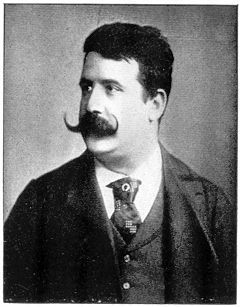
Ruggero Leoncavallo

Biography

Ruggero Leoncavallo (23 April 1857 – 9 August 1919) was an Italian opera composer. His opera Pagliacci remains one of the most popular works in the operatic repertory, appearing as number 14 on Opera America's 2007 list of the 20 most-performed operas in North America.

Biography
The son of a police magistrate, Leoncavallo was born in Naples on 23 April 1857 and educated at the city's Conservatorio San Pietro a Majella. (The date 8 March 1857 or 1858, given for his birth in some older histories of music, is incorrect.). After some years spent teaching and in ineffective attempts to obtain the production of more than one opera, he saw the enormous success of Pietro Mascagni's Cavalleria rusticana in 1890, and he wasted no time in producing his own verismo hit, Pagliacci. (According to Leoncavallo, the plot of this work had a real-life origin: he claimed it derived from a murder trial over which his father had presided.)

Pagliacci was performed in Milan in 1892 with immediate success; today it is the only work by Leoncavallo in the standard operatic repertory. Its most famous aria Vesti la giubba ("Put on the greasepaint" or, in the better-known older translation, "On with the motley") was recorded by Enrico Caruso and laid claim to being the world's first record to sell a million copies (although this is probably a total of Caruso's various versions made in 1902, 1904 and 1907)

The next year his I Medici was also produced in Milan, but neither it nor Chatterton (1896)—both early works—obtained much lasting favour. Much of Chatterton, however, was recorded by the Gramophone Company (later HMV) as early as 1908. It was not until Leoncavallo's La bohème was performed in 1897 in Venice that his talent obtained public confirmation. However, it was outshone by Puccini's opera of the same name and on the same subject, which was premiered in 1896. Two tenor arias from Leoncavallo's version are still occasionally performed, especially in Italy. Subsequent operas by Leoncavallo were Zazà (1900) (the opera of Geraldine Farrar's famous farewell performance at the Met, and Der Roland von Berlin (1904). He had a brief success with Gli zingari which premiered in Italian in London in 1912, with a long run at the Hippodrome Theatre. Gli zingari also reached the United States but soon disappeared from the repertoire.

After a series of operettas, Leoncavallo tried for one last serious effort (Edipo Re), but he died before he could finish the orchestration, which was completed by Giovanni Pennacchio. From the 1970s the opera has had a number of revivals, both as concert performances (including Rome 1972, Amsterdam 1977 and Vienna 1998) as well as a fully staged production in Turin in 2002. In Edipo Re (a short one act work) the composer uses exactly the same melody for the final scene Miei poveri fior, per voi non più sole... (with the blinded Edipo) as he had for the Act IV Soprano aria from Der Roland von Berlin. It has been assumed (see The New Grove Dictionary of Opera) that Leoncavallo left the opera more or less complete (except for the orchestration), but Pennacchio may have had to do more and may have 'filled in the gaps' using Leoncavallo's earlier music. The libretto for Edipo Re was written by Giovacchino Forzano, who also wrote Il piccolo Marat for Pietro Mascagni and two of the one-act operas for Puccini's Il trittico.

Little or nothing from Leoncavallo's other operas is heard today, but the baritone arias from Zazà were great concert and recording favourites among baritones and Zazà as a whole is sometimes revived, as is his La bohème. The tenor arias from La bohème remain recording favorites.

Leoncavallo also composed songs, most famously Mattinata, which he wrote for the Gramophone Company (which became HMV) with Caruso in mind. On 8 April 1904, Leoncavallo accompanied Caruso at the piano as they recorded the song.

Leoncavallo was the librettist for most of his own operas. Many considered him the greatest Italian librettist of his time after Boito. Among Leoncavallo's libretti for other composers is his contribution to the libretto for Puccini's Manon Lescaut.

Ruggero Leoncavallo died in Montecatini Terme, Tuscany, on 9 August 1919.

Operas
  • Pagliacci – 21 May 1892, Teatro Dal Verme, Milan.
  • I Medici – 9 November 1893, Teatro Dal Verme, Milan). (The first part of the uncompleted trilogy, Crepusculum.)
  • Chatterton – 10 March 1896, Teatro Argentina, Rome. (Revision of a work written in 1876.)
  • La bohème – 6 May 1897, Teatro La Fenice, Venice.
  • Zazà – 10 November 1900, Teatro Lirico, Milan.
  • Der Roland von Berlin – 13 December 1904, Städtische Oper, Berlin.
  • Maïa – 15 January 1910, Teatro Costanzi, Rome.
  • Gli zingari – 16 September 1912, Hippodrome, London.
  • Mimi Pinson – 1913, Teatro Massimo, Palermo. (Revision of La bohème.)
  • Goffredo Mameli – 27 April 1916, Teatro Carlo Felice, Genoa. (Note that the Fondazione Leoncavallo classes this as an opera rather than an operetta.)
  • Edipo Re – 13 December 1920, Chicago Opera. (Produced after the composer's death, orchestration not by Leoncavallo, completed by Giovanni Pennacchio)
Operettas
  • La jeunesse de Figaro – 1906, USA
  • Malbrouck – 19 January 1910, Teatro Nazionale, Rome.
  • La reginetta delle rose – 24 June 1912, Teatro Costanzi, Rome.
  • Are You There? – 1 November 1913, Prince of Wales Theatre, London.
  • La candidata – 6 February 1915, Teatro Nazionale, Rome.
  • Prestami tua moglie – 2 September 1916, Casino delle Terme, Montecatini. (English title: Lend me your wife.)
  • A chi la giarrettiera? – 16 October 1919, Teatro Adriano, Rome. (English title: Whose Garter Is This?.)
  • Il primo bacio – 29 April 1923 Salone di cura, Montecatini. Produced after the composer's death.
  • La maschera nuda – 26 June 1925 Teatro Politeama, Naples. Produced after the composer's death.
  • Other works
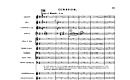
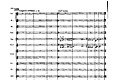
    • La nuit de mai -Poème Symphonique after Alfred de Musset, Paris 1886 (also performed and recorded in 1990)
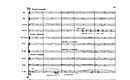
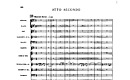
    • Séraphitus Séraphita - Poema Sinfonico after H. de Balzac, Teatro alla Scala, Milan 1894
    Media

    The above text is available under the Creative Commons Attribution-ShareAlike License ( creativecommons.org/licenses/by-sa/3.0/ ). It uses material from the Wikipedia article "Ruggero Leoncavallo" ( en.wikipedia.org/wiki/Ruggero_Leoncavallo ).

    Other names

    Ruggiero Leoncavallo, da:Ruggiero Leoncavallo, de:Ruggiero Leoncavallo, el:Ρουτζέρο Λεονκαβάλο, eo:Ruggiero Leoncavallo, ko:루제로 레온카발로, hr:Ruggiero Leoncavallo, os:Леонкавалло, Руджеро, he:רוג'רו ליאונקוואלו, ka:რუჯერო ლეონკავალო, la:Rogerus Leoncavallo, lt:Rudžeras Leonkavalis, nl:Ruggiero Leoncavallo, ja:ルッジェーロ・レオンカヴァッロ, pl:Ruggiero Leoncavallo, ro:Ruggiero Leoncavallo, ru:Леонкавалло, Руджеро, scn:Ruggeru Liuncavaddu, sl:Ruggiero Leoncavallo, sv:Ruggiero Leoncavallo, uk:Руджеро Леонкавалло

    All music

    Jump to: P

    You may also find sheet music by Leoncavallo on Sheet Music Plus.