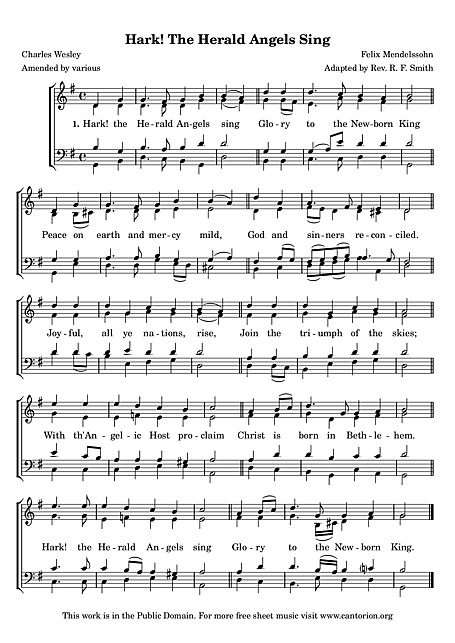
Hark! The Herald Angels Sing
- Composer
- F Mendelssohn
- Lyricist
- Charles Wesley
- Type
- Christmas Carol
- Year composed
- 1840
- Pages
- 2
- Instruments
- Voice, SATB
- Lyricist
- Charles Wesley
- Type
- Christmas Carol
- Licence
- Public domain
- Uploaded by
- Music Library
- Filesize
- 128 KB
If you can't open this file, you'll need to install the Adobe Reader.
Reviews
Click to rate
No reviews yet
Add review
About
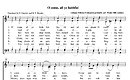
This is a transcription from Rev. Richard R. Chope, Carols For Use In Church (London: William Clowes & Sons, 1894).
For a scan of the original, including a detailed dynamics scheme, visit www.hymnsandcarolsofchristmas.com
About Hark! The Herald Angels Sing
"Hark! The Herald Angels Sing" is a Christmas hymn or carol written by Charles Wesley, brother of the Methodist movement founder John Wesley. It first appeared in Hymns and Sacred Poems in 1739, under the topic of "Hymn for Christmas-Day". The original opening couplet was "Hark! how all the welkin rings / Glory to the King of Kings". The version known today is the result of alterations by various hands, most notably George Whitefield, Wesley's co-worker, who changed the opening couplet to the familiar one we know today.
Tune
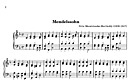
The tune that is normally used for this carol is based on a chorus composed by Felix Mendelssohn in 1840, part of his Festgesang (Gutenberg cantata) or Festgesang zur Eröffnung der am ersten Tage der vierten Säkularfeier der Erfindung der Buchdruckerkunst ("Festival Song.. to commemorate the invention of book printing.").
Wesley envisioned the song being sung to the same tune as his song Christ the Lord Is Risen Today, and in some hymnals, is included along with the more popular version.
This hymn was regarded as one of the Great Four Anglican Hymns and published as number 403 in "The Church Hymn Book" (New York and Chicago, USA, 1872).
In the UK, Hark! The Herald Angels Sing has popularly been performed in an arrangement that maintains the basic original William Hayman Cummings harmonisation of the Mendelssohn tune for the first two verses but adds a soprano descant and a last verse harmonisation for the organ in verse 3 by Sir David Willcocks. This arrangement was first published in 1961 by Oxford University Press in the first book of the Carols for Choirs series. For many years it has served as the recessional hymn of the annual Service of Nine Lessons and Carols in King's College Chapel, Cambridge.
An uncommon arrangement of the hymn to the tune "See, the Conqu'ring hero comes" from Judas Maccabaeus (Handel) normally associated with the hymn Thine Be the Glory is traditionally used as the recessional hymn of the Festival of Nine Lessons and Carols from St Patrick's Cathedral, Dublin. This is broadcast live each year on Christmas Eve on RTÉ Radio 1. The usual (first) three verses are divided into six verses each with chorus. The arrangement features a brass fanfare with drums in addition to the cathedral organ and takes about seven and a half minutes to sing.
Notable recordings
The above text is available under the Creative Commons Attribution-ShareAlike License ( creativecommons.org/licenses/by-sa/3.0/ ). It uses material from the Wikipedia article "Hark! The Herald Angels Sing" ( en.wikipedia.org/ ... ark!_The_Herald_Angels_Sing ).
Tune
The tune that is normally used for this carol is based on a chorus composed by Felix Mendelssohn in 1840, part of his Festgesang (Gutenberg cantata) or Festgesang zur Eröffnung der am ersten Tage der vierten Säkularfeier der Erfindung der Buchdruckerkunst ("Festival Song.. to commemorate the invention of book printing.").
Wesley envisioned the song being sung to the same tune as his song Christ the Lord Is Risen Today, and in some hymnals, is included along with the more popular version.
This hymn was regarded as one of the Great Four Anglican Hymns and published as number 403 in "The Church Hymn Book" (New York and Chicago, USA, 1872).
In the UK, Hark! The Herald Angels Sing has popularly been performed in an arrangement that maintains the basic original William Hayman Cummings harmonisation of the Mendelssohn tune for the first two verses but adds a soprano descant and a last verse harmonisation for the organ in verse 3 by Sir David Willcocks. This arrangement was first published in 1961 by Oxford University Press in the first book of the Carols for Choirs series. For many years it has served as the recessional hymn of the annual Service of Nine Lessons and Carols in King's College Chapel, Cambridge.
An uncommon arrangement of the hymn to the tune "See, the Conqu'ring hero comes" from Judas Maccabaeus (Handel) normally associated with the hymn Thine Be the Glory is traditionally used as the recessional hymn of the Festival of Nine Lessons and Carols from St Patrick's Cathedral, Dublin. This is broadcast live each year on Christmas Eve on RTÉ Radio 1. The usual (first) three verses are divided into six verses each with chorus. The arrangement features a brass fanfare with drums in addition to the cathedral organ and takes about seven and a half minutes to sing.
Notable recordings
- John Rutter and the Cambridge Singers - John Rutter: A Christmas Festival (recorded with the Farnham Youth Choir)
- Stephen Cleobury and The Choir of King's College, Cambridge - O Come All Ye Faithful, using the descant by Philip Ledger. (The Choir has also recorded the arrangement with the David Willcocks descant included in Carols for Choirs)
- George Guest and the Choir of St John's College, Cambridge - Christmas at St John's (using the David Willcocks descant)
- David Hill and the Winchester Cathedral Choir - O Come Let Us Adore Him
- Andy Williams
- Nat King Cole
- Peace on Earth contained an altered version.
- A Charlie Brown Christmas
- Frank Sinatra
- Amy Grant
- Johnny Cash
- Bob Dylan
- Mahalia Jackson
- Mariah Carey
- Jewel
- Carrie Underwood
- Busted, the B-side to the single "Crashed the Wedding".
- Weezer, released on the Christmas with Weezer EP.
- Dustin Kensrue, on his 2008 album This Good Night Is Still Everywhere.
- Steve Ouimette, released as downloadable content for Guitar Hero 5.
- Laura Branigan, for the 1991 album The Christmas Album: A Gift of Hope.
The above text is available under the Creative Commons Attribution-ShareAlike License ( creativecommons.org/licenses/by-sa/3.0/ ). It uses material from the Wikipedia article "Hark! The Herald Angels Sing" ( en.wikipedia.org/ ... ark!_The_Herald_Angels_Sing ).
Other arrangements
-

-
Hark! The Herald Angels Sing
- Composer
- Felix Mendelssohn
- Instruments
- Voice
-
Hark! The Herald Angels Sing