Judas Maccabaeus
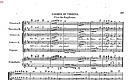
Overture (full score)
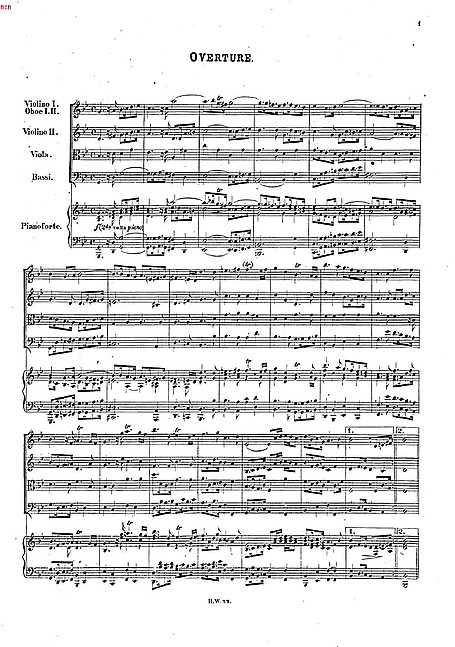
- Composer
- G F Handel
- Opus
- HWV 63
- Year composed
- 1746
- Pages
- 6
- Instruments
- Orchestra
- Licence
- Public domain
- Uploaded by
- Music Library
- Filesize
- 2.62 MB
If you can't open this file, you'll need to install the Adobe Reader.
Reviews
Click to rate
No reviews yet
Add review
About Judas Maccabaeus
Judas Maccabaeus (HWV 63) is an oratorio in three acts by George Frideric Handel.
Background
The political context is the Jacobite Rising of 1745. Handel in 1746 hastily composed the Occasional Oratorio for the encouragement of the English. After the success of the British forces at the Battle of Culloden he started a work in honour of the victorious Prince William Augustus, Duke of Cumberland, addressed as "Truly Wise, Valiant, and Virtuous Commander" in the libretto.
The first performance took place on April 1, 1747 at Covent Garden, and Judas Maccabaeus became one of Handel's most popular oratorios with frequent reprises, second only to Messiah.
The chorus "See, the Conqu'ring hero comes" became well-known later as the music was invariably played by brass bands at the opening of new railway lines and stations in Britain during the 19th century and is one of the movements in Sir Henry Wood's Fantasia on British Sea Songs. A Hebrew translation by Aharon Ashman, that was written for the 1932 Maccabiah Games, has become popular in Israel as a Hanukkah song.
In 1884 Edmond Louis Budry wrote new words to "See, the Conqu'ring hero comes" which is now a popular hymn "Thine Be the Glory" ("À toi la gloire").
Orchestration
Thomas Morell based the libretto on the apocryphal 1 Maccabees 2-8, adding some motives from the Antiquitates Judaicae of Flavius Josephus. Georg Gottfried Gervinus translated the libretto into German.
Dramatis Personae
The above text is available under the Creative Commons Attribution-ShareAlike License ( creativecommons.org/licenses/by-sa/3.0/ ). It uses material from the Wikipedia article "Judas Maccabaeus (Handel)" ( en.wikipedia.org/ ... i/Judas_Maccabaeus_(Handel) ).
Background
The political context is the Jacobite Rising of 1745. Handel in 1746 hastily composed the Occasional Oratorio for the encouragement of the English. After the success of the British forces at the Battle of Culloden he started a work in honour of the victorious Prince William Augustus, Duke of Cumberland, addressed as "Truly Wise, Valiant, and Virtuous Commander" in the libretto.
The first performance took place on April 1, 1747 at Covent Garden, and Judas Maccabaeus became one of Handel's most popular oratorios with frequent reprises, second only to Messiah.
The chorus "See, the Conqu'ring hero comes" became well-known later as the music was invariably played by brass bands at the opening of new railway lines and stations in Britain during the 19th century and is one of the movements in Sir Henry Wood's Fantasia on British Sea Songs. A Hebrew translation by Aharon Ashman, that was written for the 1932 Maccabiah Games, has become popular in Israel as a Hanukkah song.
In 1884 Edmond Louis Budry wrote new words to "See, the Conqu'ring hero comes" which is now a popular hymn "Thine Be the Glory" ("À toi la gloire").
Orchestration
- 2 flutes
- 2 transverse flutes
- 2 oboes
- 2 bassoons
- 2 French horns
- 3 trumpets
- timpani
- 3 violins
- viola
- cello
- double bass
- organ
- harpsichord
Thomas Morell based the libretto on the apocryphal 1 Maccabees 2-8, adding some motives from the Antiquitates Judaicae of Flavius Josephus. Georg Gottfried Gervinus translated the libretto into German.
Dramatis Personae
- Judas Maccabaeus (tenor)
- Simon, his Brother (bass)
- Israelitish Woman (soprano)
- Israelitish Man (mezzo-soprano)
- Eupolemus, the Jewish Ambassador to Rome (alto)
- First Messenger (alto)
- Second Messenger (bass)
- Chorus of Israelites
- Chorus of Youths
- Chorus of Virgins
- Judas: John Beard
- Israelite man: Caterina Galli (mezzo-soprano)
- Israelite woman: Elisabetta de Gambarini (soprano)
- Simon, brother to Judas: Thomas Reinhold (bass)
- Eupolemus, Jewish ambassador to Rome: Thomas Reinhold
The above text is available under the Creative Commons Attribution-ShareAlike License ( creativecommons.org/licenses/by-sa/3.0/ ). It uses material from the Wikipedia article "Judas Maccabaeus (Handel)" ( en.wikipedia.org/ ... i/Judas_Maccabaeus_(Handel) ).
Other arrangements
-
-
Judas Maccabaeus
Chorus of Virgins (full score) - Composer
- George Frideric Handel
- Opus
- HWV 63
- Rating
-
Judas Maccabaeus
-
-
Judas Maccabaeus
Introduction and contents (German) - Composer
- George Frideric Handel
- Opus
- HWV 63
-
Judas Maccabaeus
Buy printed editions
We have selected some printed editions we think may be useful.
-
- Christ Is Arisen (from the oratorio Judas Maccabaeus)
- Price
- $1.50
- Instruments
- Percussion, Trumpet, ...
- Publisher
- Alfred Publishing
-
- Hallelujah, Amen (from Judas Maccabaeus)
- Price
- $1.65
- Instruments
- Choral, Vocal
- Publisher
- Alfred Publishing
-
- Halleluia Amen From Judas Maccabaeus
- Price
- $1.80
- Instruments
- Choral, Vocal
- Publisher
- G. Schirmer
-
- Judas Maccabaeus
- Price
- $14.95
- Instruments
- Choral, Vocal
- Publisher
- G. Schirmer