Fantasiestücke
- Composer
- Robert Schumann
- Type
- Piece
- Opus
- Op. 12
- Year composed
- 1837
- Instruments
- Piano
Free sheet music
Buy printed editions
We have selected some printed editions we think may be useful.
-
- Fantasiestucke, Op. 12
- Price
- $6.95
- Instruments
- Piano
- Publisher
- G. Schirmer
-
- Fantasiestucke, Op. 12
- Price
- $8.95
- Instruments
- Piano
- Publisher
- Alfred Publishing
-
- Fantasy Pieces (3) (Fantasiestucke)
- Price
- $16.95
- Instruments
- Piano, Clarinet
- Publisher
- Edition Peters
About
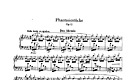
Robert Schumann's Fantasiestücke, Op. 12, are eight pieces for piano, written in 1837. Schumann titled the work inspired by the 1814 collection of novellas Fantasiestücke in Callots Manier by his favourite author, E. T. A. Hoffmann, and dedicated it to Fräulein Anna Robena Laidlaw (1819–1901), an accomplished and attractive 18-year old Scottish pianist with whom Schumann had carried on a brief flirtation.
Schumann composed the pieces with the characters Florestan and Eusebius in mind, representing the duality of his personality. Eusebius depicts the dreamer in Schumann while Florestan represents his passionate side. These two characters parlay with one another throughout the collection, ending self-reflectively with Eusebius in "Ende vom Lied".
Details
1. "Des Abends" ("In the Evening") in D-flat major / Sehr innig zu spielen (Play very intimately)
2. "Aufschwung" ("Soaring", literally "Upswing") in F minor / Sehr rasch (Very rapidly)
3. "Warum?" ("Why?") in D-flat major / Langsam und zart (Slowly and tenderly)
4. "Grillen" ("Whims") in D-flat major / Mit Humor (With humor)
5. "In der Nacht" ("In the Night") in F minor / Mit Leidenschaft (With passion)
6. "Fabel" ("Fable") in C major / Langsam (Slowly)
7. "Traumes Wirren" ("Dream's Confusions") in F major / Äußerst lebhaft (Extremely lively)
8. "Ende vom Lied" ("End of the Song") in F major / Mit gutem Humor (With good humor)
The above text is available under the Creative Commons Attribution-ShareAlike License ( creativecommons.org/licenses/by-sa/3.0/ ). It uses material from the Wikipedia article "Fantasiestücke" ( en.wikipedia.org/wiki/Fantasiest ).
Schumann composed the pieces with the characters Florestan and Eusebius in mind, representing the duality of his personality. Eusebius depicts the dreamer in Schumann while Florestan represents his passionate side. These two characters parlay with one another throughout the collection, ending self-reflectively with Eusebius in "Ende vom Lied".
Details
1. "Des Abends" ("In the Evening") in D-flat major / Sehr innig zu spielen (Play very intimately)
2. "Aufschwung" ("Soaring", literally "Upswing") in F minor / Sehr rasch (Very rapidly)
3. "Warum?" ("Why?") in D-flat major / Langsam und zart (Slowly and tenderly)
4. "Grillen" ("Whims") in D-flat major / Mit Humor (With humor)
5. "In der Nacht" ("In the Night") in F minor / Mit Leidenschaft (With passion)
6. "Fabel" ("Fable") in C major / Langsam (Slowly)
7. "Traumes Wirren" ("Dream's Confusions") in F major / Äußerst lebhaft (Extremely lively)
8. "Ende vom Lied" ("End of the Song") in F major / Mit gutem Humor (With good humor)
The above text is available under the Creative Commons Attribution-ShareAlike License ( creativecommons.org/licenses/by-sa/3.0/ ). It uses material from the Wikipedia article "Fantasiestücke" ( en.wikipedia.org/wiki/Fantasiest ).
Other titles
Fantasy pieces.


