Papillons
- Composer
- Robert Schumann
- Type
- Suite
- Opus
- Op. 2
- Year composed
- 1831
- Instruments
- Piano
Free sheet music
Buy printed editions
We have selected some printed editions we think may be useful.
-
- Papillons
- Price
- $6.95
- Instruments
- Piano
- Publisher
- Alfred Publishing
-
- Papillons (Butterflies), Op. 2
- Price
- $6.95
- Instruments
- Piano
- Publisher
- G. Schirmer
-
- Papillons (12 Pieces)
- Price
- $9.95
- Instruments
- Piano
- Publisher
- Edition Peters
-
- Papillons (12 Pieces)
- Price
- $11.95
- Instruments
- Piano
- Publisher
- Edition Peters
About
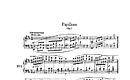
Papillons, Op. 2, is a suite of piano pieces written in 1831 by Robert Schumann. Meaning 'butterflies', Papillons is meant to represent a masked ball and was inspired by the novel Flegeljahre by Jean Paul.
The suite begins with a six-measure introduction before launching into a variety of dance-like movements. Each movement is unrelated to the preceding ones, except for the finale, in which the theme of the first movement returns. This movement starts out by quoting the theme of the traditional Grossvater Tanz (Grandfather's Dance), which was always played at the end of a wedding or similar celebration.
Schumann quoted some themes from Papillons in his later work, Carnaval, Op. 9, but none of them appear in the section of that work titled "Papillons". The main waltz theme from the first movement in Papillons was quoted in the section "Florestan", with an explicit acknowledgment written in the score, and again in the final section, "Marche des Davidsbündler contre les Philistins", but without acknowledgment. The Grandfather Dance also appears in the final section, with the inscription "Thème du XVIIème siècle".
The above text is available under the Creative Commons Attribution-ShareAlike License ( creativecommons.org/licenses/by-sa/3.0/ ). It uses material from the Wikipedia article "Papillons" ( en.wikipedia.org/wiki/Papillons ).
The suite begins with a six-measure introduction before launching into a variety of dance-like movements. Each movement is unrelated to the preceding ones, except for the finale, in which the theme of the first movement returns. This movement starts out by quoting the theme of the traditional Grossvater Tanz (Grandfather's Dance), which was always played at the end of a wedding or similar celebration.
Schumann quoted some themes from Papillons in his later work, Carnaval, Op. 9, but none of them appear in the section of that work titled "Papillons". The main waltz theme from the first movement in Papillons was quoted in the section "Florestan", with an explicit acknowledgment written in the score, and again in the final section, "Marche des Davidsbündler contre les Philistins", but without acknowledgment. The Grandfather Dance also appears in the final section, with the inscription "Thème du XVIIème siècle".
The above text is available under the Creative Commons Attribution-ShareAlike License ( creativecommons.org/licenses/by-sa/3.0/ ). It uses material from the Wikipedia article "Papillons" ( en.wikipedia.org/wiki/Papillons ).


